
Right-of-Way Vegetation Management
Trees, brush, and invasive plants growing into a utility or pipeline corridor create safety hazards and access problems. Our vegetation management crews clear and treat these corridors with herbicide and mechanical methods, keeping them passable and compliant.
Branch Locations:
Raleigh-Durham, Charlotte, Winston-Salem / Greensboro, Wilmington, Myrtle Beach, Charleston, Greenville-Spartanburg, Atlanta, Savannah, Orlando, Tampa, Virginia Beach, Fairfax, Montgomery County, Lewes, Chicago, Houston, Dallas-Fort Worth, San Marcos Corridor, Nashville
Have a multi-site footprint? Learn how we can work with you
Service DescriptioN
About Our Right-of-Way Vegetation Management Service
Right-of-way vegetation management is the control of trees, brush, and invasive plants along utility corridors, pipelines, roadways, and other linear infrastructure.
Vegetation that grows into a right-of-way can damage power lines, block access for maintenance crews, obstruct sight lines, and create wildfire risk. Utilities, transportation agencies, and pipeline operators maintain clearance requirements that must be met on a recurring basis.
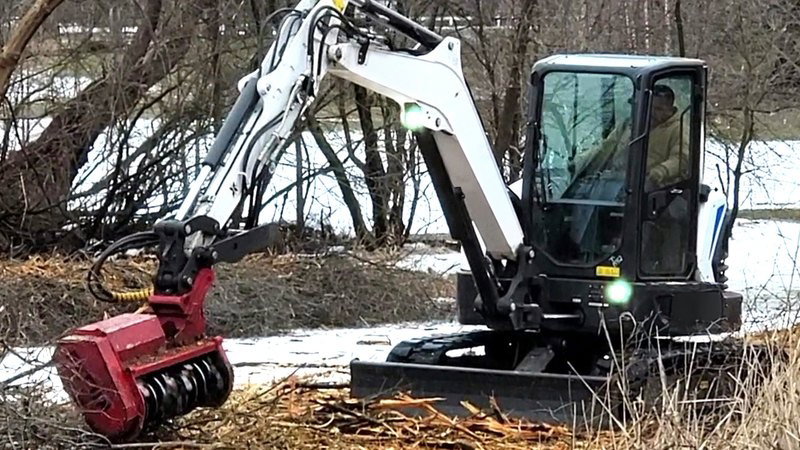
Dragonfly Pond Works provides right-of-way vegetation management using licensed herbicide application, mechanical clearing, and selective trimming to keep corridors safe and compliant.
Key Benefits of Right-of-Way Vegetation Management
Clearance Standards Maintained
We manage vegetation to meet the clearance requirements set by the utility, transportation agency, or pipeline operator.
Licensed Herbicide Application
Our licensed applicators use selective herbicides to control regrowth and reduce the frequency of mechanical clearing.
Access for Maintenance Crews
Keeping the corridor clear ensures that utility and pipeline crews can reach their infrastructure when they need to.
Reduced Wildfire Risk
Removing dead wood, brush, and overgrown vegetation lowers the fuel load along the corridor.
Sensitive Areas Respected
We adjust methods near wetlands, streams, and other sensitive features to meet environmental permit conditions.
Documented Work for Compliance
Every visit is documented with maps, photos, and treatment records the corridor operator can use for regulatory reporting.
From The Field
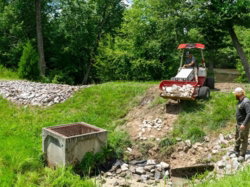
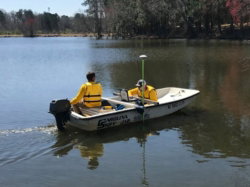
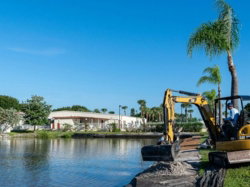
Service Photos

How It Works
Corridor Assessment
We walk or drive the corridor to identify vegetation that is encroaching, note sensitive areas, and plan access points.
Work Plan
We develop a treatment plan that specifies methods, herbicide selections, and timing based on the species present and the operator's requirements.
Clearing and Treatment
Crews perform mechanical clearing, selective herbicide application, or both to bring the corridor into compliance.
Sensitive-Area Protocols
Near wetlands, waterways, or protected habitat, we follow the permit conditions and use methods that minimize impact.
Reporting
We submit completion reports with treatment maps, herbicide records, and before-and-after photographs.
Why Right-of-Way Vegetation Management is Important
Overgrown right-of-way corridors create real consequences: downed power lines, blocked pipeline access, and sight-line hazards on roadways. Vegetation management keeps those risks under control.
A planned program with the right timing and methods costs less than emergency clearing and keeps the corridor in continuous compliance.
Right-of-Way Vegetation Management FAQs
Answers to our most common questions about this service. If you have a different question not answered here, get in touch.
We manage vegetation along utility lines, pipelines, roadways, rail corridors, and other linear infrastructure.
We follow the permit conditions for the corridor and use selective herbicides and application methods that minimize impact to sensitive areas.
The frequency depends on the growth rate, the species present, and the clearance standards the operator must maintain. We recommend a schedule during the assessment.
Yes. Licensed herbicide application is one of the most effective ways to manage regrowth and reduce the need for repeated mechanical clearing.
Yes. We have the crews and equipment to manage corridor projects of varying lengths and terrain types.
We provide treatment maps, herbicide application records, photo documentation, and completion reports formatted for the corridor operator.